

Local AI Agents in Healthcare: An Operational Intelligence Platform for No-Show Reduction
Executive Summary
Healthcare organizations have made significant progress in predictive analytics. Models can identify risk, forecast operational demand, and generate increasingly accurate insights from scheduling and clinical data.
Yet many organizations encounter the same challenge:
Predictions improve — operational outcomes do not.
The core issue is not model performance, but the gap between predictive intelligence and day-to-day execution. Risk scores often remain isolated in dashboards instead of shaping real workflows.
This article proposes a practical reference architecture for operationalizing Local AI Agents — including coding agents, desktop agents, and automation agents — within healthcare environments. Using appointment no-show reduction as a real-world example, the architecture demonstrates how intelligence can be transformed into operational action while maintaining governance, safety, and human oversight.
1. Operational Intelligence Platform Reference Architecture
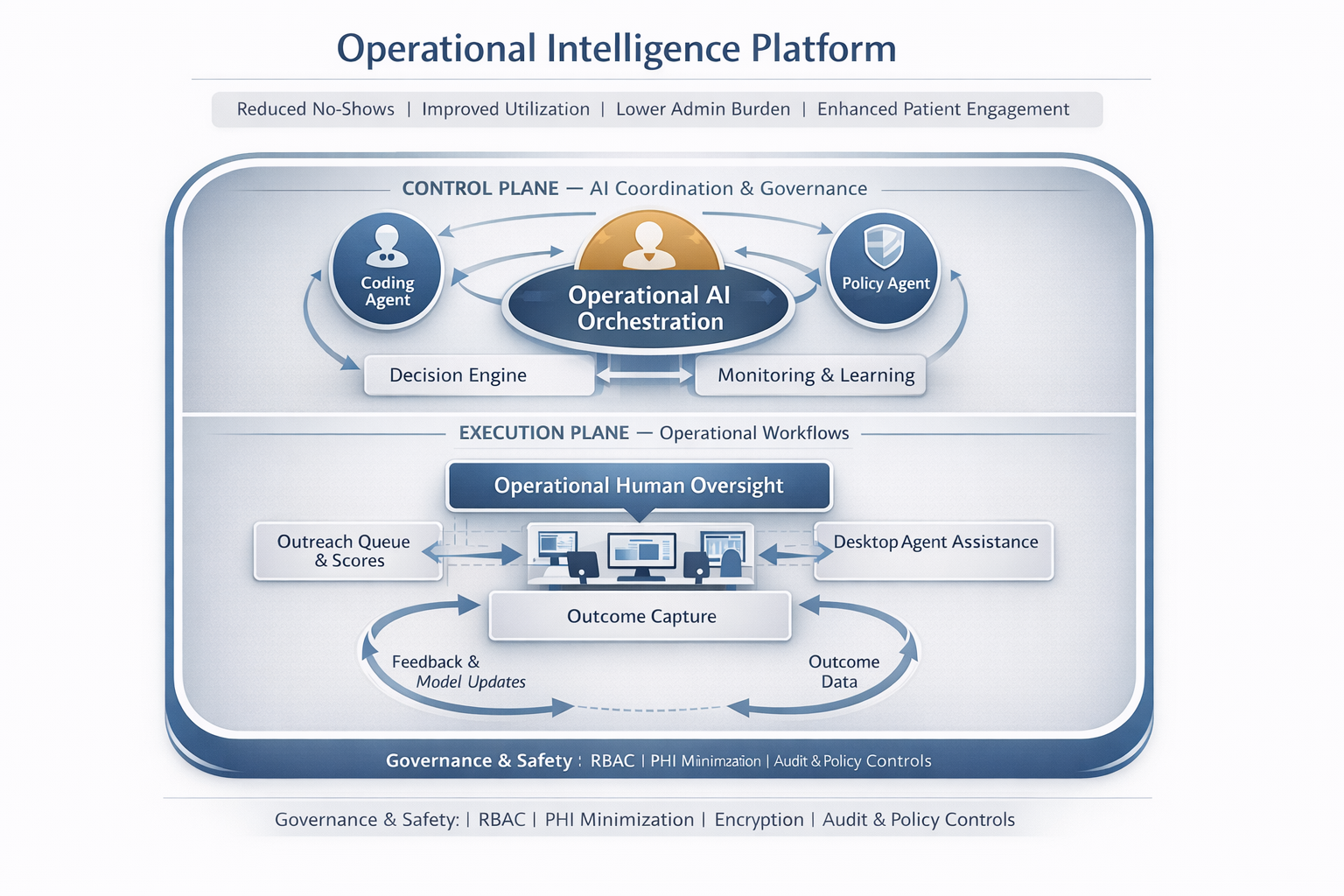
Figure 1 — Operational Intelligence Platform for Local AI Agents in Healthcare.
The platform connects predictive intelligence to operational execution through coordinated AI agents, human oversight, and continuous learning.
The Operational Intelligence Platform exists to operationalize decisions, not just generate predictions. It provides a structured model for turning risk signals into governed actions across healthcare workflows.
At an enterprise level, Local AI Agents are coordinated through a Control Plane and actioned through an Execution Plane. This separation keeps decision logic centralized while allowing workflow teams to execute within clear operational boundaries.
Governance and safety are embedded into platform behavior through policy controls, auditability, and role-based access. A continuous learning loop captures outcome data to improve model calibration, decision policies, and workflow performance over time.
2. Business Outcomes Layer: Defining Operational Goals
The architecture is designed around operational outcomes rather than model performance alone.
Key outcomes include:
- Reduced appointment no-show rates
- Improved schedule utilization
- Increased revenue capture
- Reduced administrative burden
- Improved patient engagement and access
Operational goals define how intelligence is implemented.
3. Control Plane: AI Coordination and Decision Intelligence
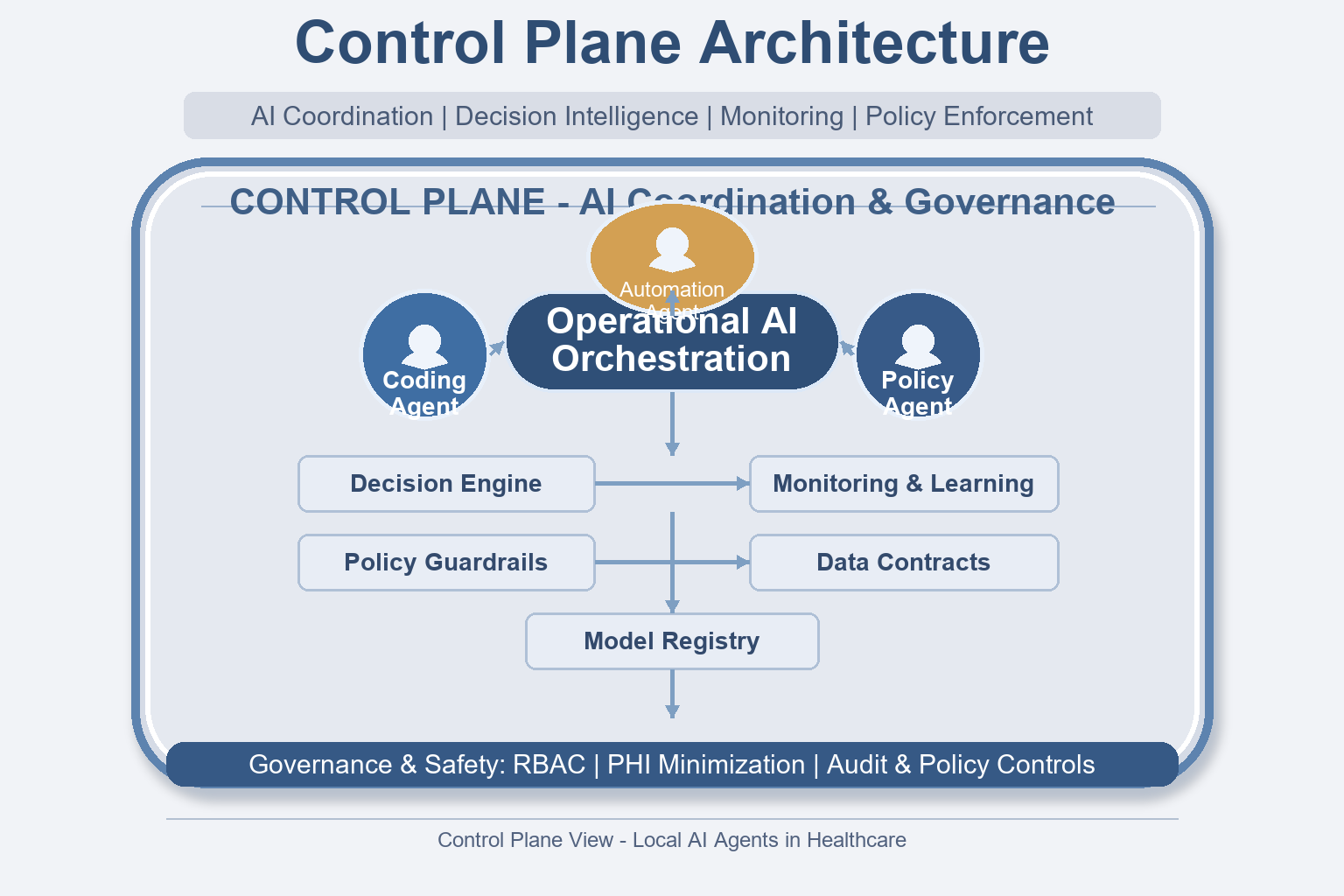
Figure 2 - Control Plane view of AI coordination and decision intelligence.
The Control Plane governs intelligence across the platform.
It is the decision and coordination layer of the architecture. The Control Plane determines what actions should occur and under what policy constraints, while the Execution Plane carries out those actions through operational workflows and Human-in-the-Loop review.
3.1 AI Agent Orchestration
In this platform, AI Agent Orchestration is implemented as the Flask control layer (backend/app.py) behind SvelteKit.
It coordinates request flow across the runtime stack:
- SvelteKit UI sends requests to
/api/*and/socket.io. - SvelteKit routes and proxy forward traffic to Flask.
- Flask dispatches to domain services such as
backend/chatbot.py,backend/sql_qa.py, andbackend/services/azure_live_ws.py. - Flask returns normalized responses to the Execution Plane and logs operational events.
Control and governance in this orchestration layer are enforced through route boundaries, admin/auth endpoints, payload checks, lock-based concurrency control for Ollama requests, and audit-oriented logging.
3.2 Coding Agents
In this platform, Coding Agents represent code-level automation used to maintain orchestration logic, APIs, and reliability controls across SvelteKit and Flask.
They operate on core system assets:
- SvelteKit API and proxy layer:
src/routes/api/*andvite.config.ts - Flask orchestration and service routes:
backend/app.py - Domain agent modules:
backend/sql_qa.py,backend/chatbot.py,backend/services/azure_live_ws.py
They focus on controlled change in four areas:
- integration updates across frontend routes and backend endpoints
- guardrail and policy logic updates in API handlers
- reliability improvements, including error handling and timeout behavior
- observability updates through analytics and structured logging paths
Coding Agent changes are validated through existing project checks (npm run check, linting, and endpoint-level testing) before release into operational workflows.
3.3 Automation Agents
In this platform, Automation Agents are scheduled and event-driven backend jobs that run repeatable operational actions through Flask endpoints and service modules.
They operate on core system assets:
- Flask runtime routes and orchestration handlers:
backend/app.py - Domain workflow services:
backend/sql_qa.py,backend/chatbot.py,backend/services/azure_live_ws.py - Real-time execution channel: Socket.IO namespace and events
- Analytics capture paths:
backend/analytics.pyand admin reporting routes
They handle runtime workload between orchestration logic and frontline execution:
- recurring API-driven scoring and processing tasks
- policy-gated routing to the correct operational endpoint
- queue generation for prioritized outreach and follow-up
- background monitoring signals for reliability and exception handling
These automations are implemented through route handlers in backend/app.py, associated domain modules, and Socket.IO event flows for real-time workflows.
3.4 Decision Engine
In this platform, the Decision Engine is the rules-and-threshold layer in the Flask control path that converts model or scoring outputs into actionable priorities.
It operates on core system assets:
- API decision routes and response shaping in
backend/app.py - Scoring and reasoning inputs from
backend/sql_qa.pyandbackend/chatbot.py - Policy and admin control surfaces through
/api/admin/*routes - Outcome telemetry from analytics and operational logs
It evaluates three inputs before an action is released to the Execution Plane:
- risk or score signals from agent workflows
- policy constraints (access, allowed actions, and safety checks)
- current operational limits such as queue size or processing capacity
It produces a normalized action decision returned through /api/* responses and logged for audit and analytics. Feedback from outcomes is then used to tune thresholds, routing logic, and policy settings without changing the Execution Plane workflow model.
4. Execution Plane: Operational Workflows and Human Oversight
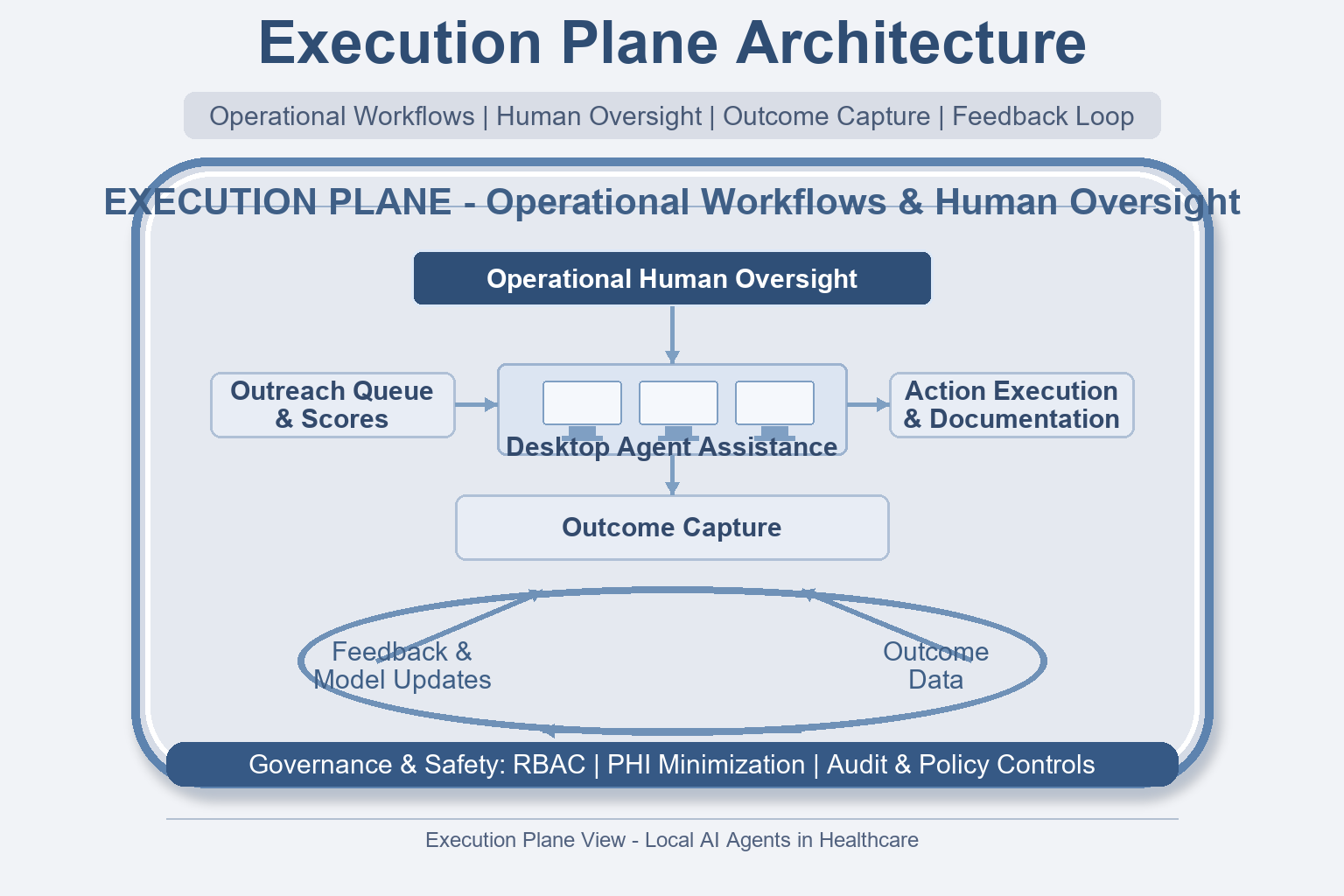
Figure 3 - Execution Plane view of operational workflows and Human-in-the-Loop oversight.
The Execution Plane translates intelligence into daily operations.
In this platform, the Execution Plane is implemented through SvelteKit user workflows and Flask-backed runtime endpoints. It is where prioritized decisions from the Control Plane are acted on by staff through UI task flows, API calls, and real-time sessions.
Where the Control Plane decides and coordinates, the Execution Plane executes and records. This layer handles user interaction, task completion, and outcome capture.
4.1 Human-in-the-Loop Oversight
In this platform, Human-in-the-Loop control is applied at the point of execution in frontend workflows. Teams review AI-prioritized tasks, confirm context, and approve final actions before submission to backend routes.
It is implemented in staff-facing Svelte pages and action paths that call /api/* services, with admin verification and audit-supporting routes in the Flask backend (/api/admin/* in backend/app.py).
4.2 Desktop Agent Assistance
In this platform, Desktop Agent support is implemented as workflow assistance in the Svelte UI to reduce operational overhead while keeping human control intact.
It supports three workflow functions:
- navigating existing tools
- presenting context
- capturing structured outcomes
Execution traffic moves through SvelteKit routes and Flask APIs, with Socket.IO used where real-time interaction is required.
4.3 Outreach Queue and Action Layer
In this platform, the Outreach Queue and action layer operationalize prioritized work items for frontline teams. Staff execute tasks through UI flows, and results are submitted through backend endpoints for persistence, analytics, and follow-up.
Outcome data from executed actions is captured in the platform's logging and analytics paths (backend/analytics.py and related /api/admin/* routes), then fed back to the Control Plane for threshold tuning, routing updates, and policy refinement.
5. Continuous Learning Loop
Operational outcomes feed back into the system through monitoring and evaluation.
This enables:
- model calibration and retraining
- policy refinement
- workflow optimization
The platform learns from real operational results rather than static historical data.
6. Governance and Safety Boundary
Governance acts as a continuous protective boundary around the platform.
Key elements include:
- PHI minimization
- role-based access controls (RBAC)
- encryption and secure access
- audit logging
- operational policy enforcement
Governance is embedded into operations rather than treated as a separate process.
7. Implementation Path: A Three-Phase Adoption Model
Phase 1 — Operational Foundations
- standardized features and labels
- batch scoring
- initial outreach prioritization
Outcome: predictive intelligence becomes operationally visible.
Phase 2 — Workflow Integration
- desktop agent assistance
- human-in-the-loop review
- structured outcome capture
Outcome: intelligence becomes embedded into daily workflows.
Phase 3 — Operational Intelligence Platform
- continuous learning loop
- agent orchestration
- expanded operational use cases
Outcome: intelligence becomes scalable infrastructure.
8. From Prediction to Operational Intelligence
Traditional analytics pipelines often end at prediction.
This platform introduces:
- coordinated agents
- structured execution workflows
- continuous learning
- governance-first design
The shift is from isolated models toward operational intelligence.
9. Strategic Outlook: Local AI Agents as Infrastructure
Appointment no-show reduction represents an initial use case, but the same platform pattern can support:
- population health outreach
- referral coordination
- operational capacity forecasting
- workflow automation
The future of healthcare AI will likely be defined less by model complexity and more by how intelligence is operationalized safely and consistently.
This article proposes a practical reference architecture for operationalizing Local AI Agents in healthcare environments, using appointment no-show reduction as a real-world example.